The Kinetic Threshold: Grey-Zone Ramming, Sonar Blinding, and Treaty Lawfare in the South China Sea
How China's Coast Guard Exploits the Sub-Gunpowder Vacuum of the 1951 US-Philippines Mutual Defense Treaty
Examining AUKUS, the Quad, South China Sea disputes, and the contest for maritime supremacy from the Strait of Malacca to the Pacific.
How China's Coast Guard Exploits the Sub-Gunpowder Vacuum of the 1951 US-Philippines Mutual Defense Treaty
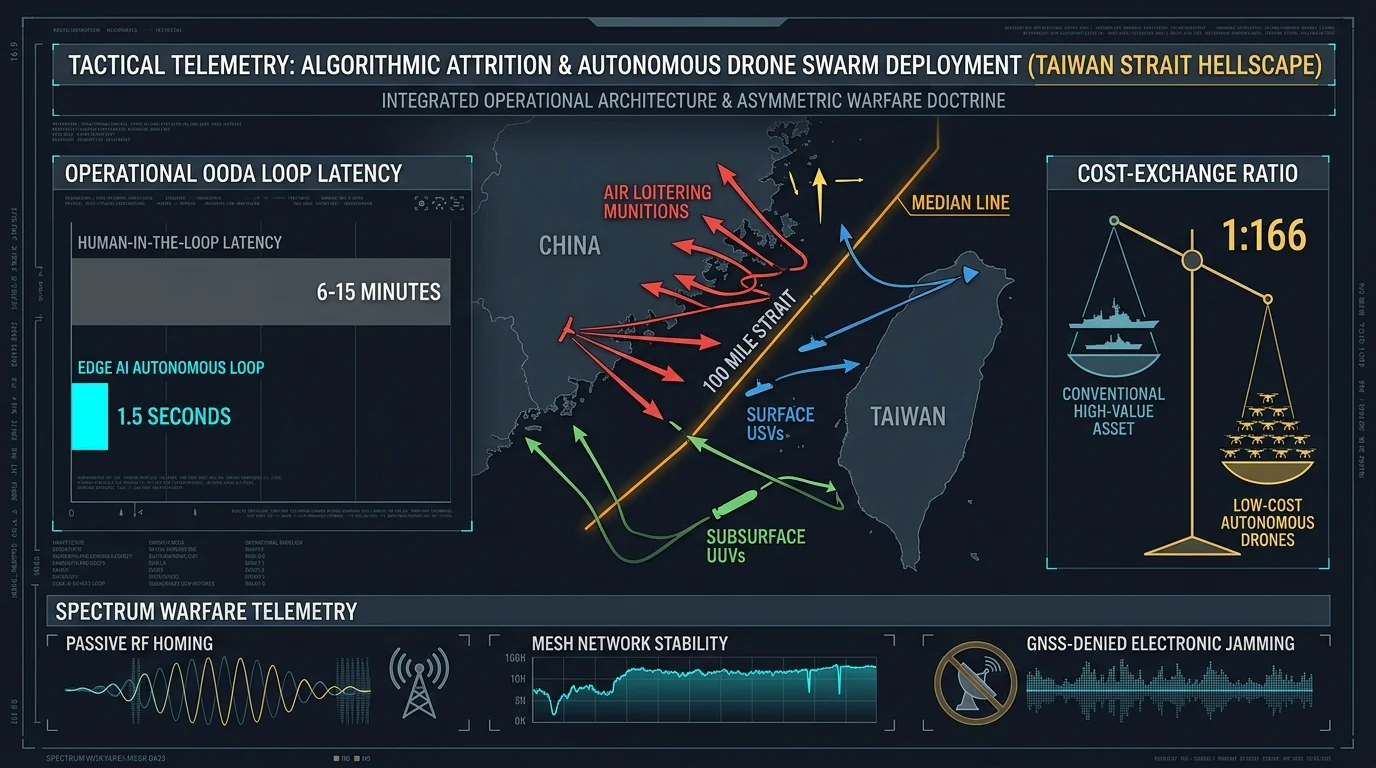
An authoritative strategic intelligence analysis on the Pentagon's 'Hellscape' doctrine, 30-second autonomous AI drone swarms, and the algorithmic defense of the Taiwan Strait.
As Bangladesh consolidates its transitional parliamentary governance structure, regional powers recalibrate maritime access and diplomatic leverage across the Bay of Bengal.
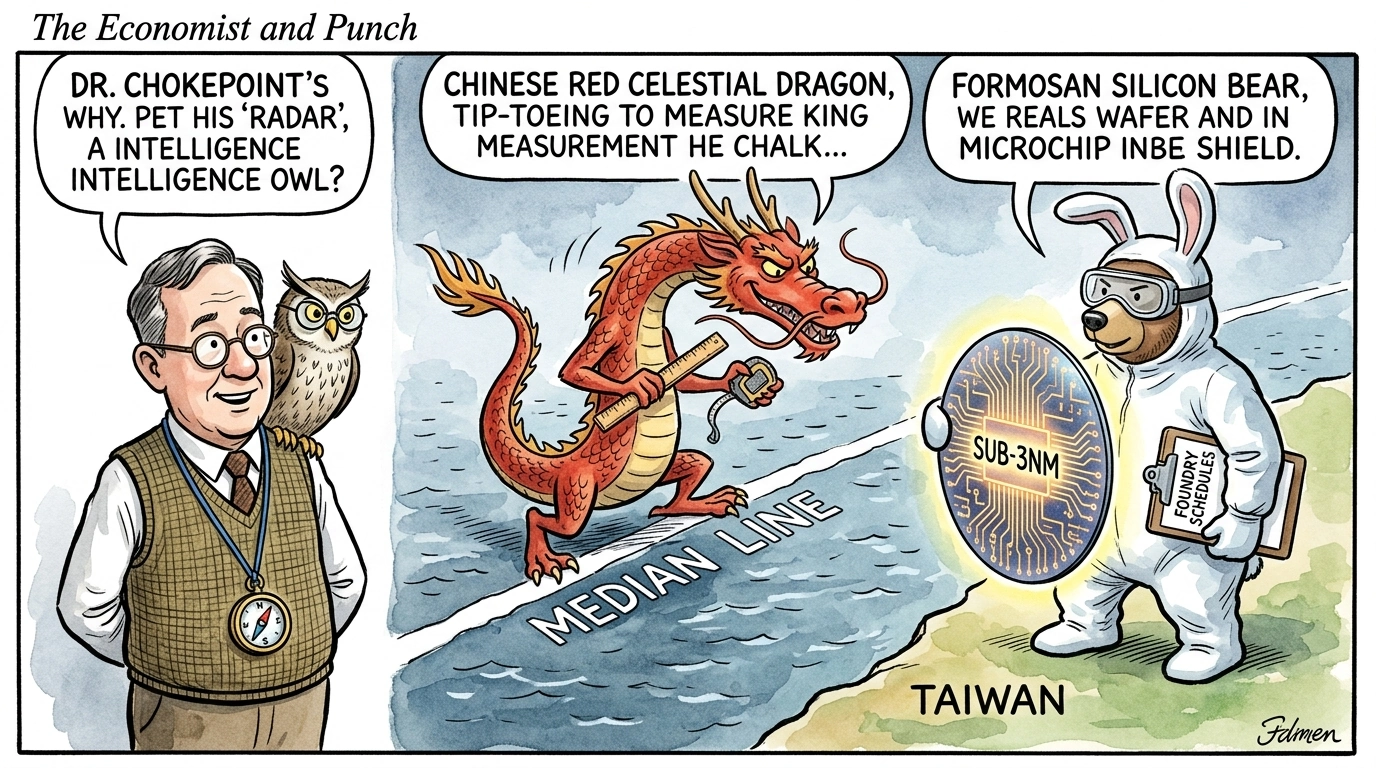
The Chinese People's Liberation Army (PLA) has further normalized high-frequency aerial and naval incursions across the historical median line of the Taiwan Strait, deploying J-16 multirole ...
In the contemporary geopolitical landscape, the intersection of critical geography and technological monopoly creates acute systemic vulnerability. Following the conclusion of Taiwan's 2026 ...
In neorealist statecraft, bilateral space technology cooperation is never purely a civilian or scientific enterprise. Space constitutes the ultimate high ground of global power projection, w...
The cross-strait security dynamic is characterized by an acute power asymmetry between the People’s Republic of China (PRC) and Taiwan (Republic of China). The primary state actors are the P...
The geopolitical landscape of the Indo-Pacific is shaped by the structural competition between the United States and the People's Republic of China. The primary state actors are China and th...
The maritime security architecture of Northern Europe and the Baltic-Black Sea axes is increasingly shaped by Russia’s revisionist attempts to undermine the NATO alliance. The primary state ...
The geopolitical landscape of the Indo-Pacific is shaped by the competition between the United States and the People's Republic of China, with the Republic of China (Taiwan) representing the...
In an anarchic international system, global maritime chokepoints serve as critical nodes of geopolitical competition and national interest. The primary state actors are the United States, ac...
The geopolitical landscape of the Western Hemisphere is defined by the United States’ imperative to maintain regional hegemony and secure maritime approaches against encroaching peer competi...
The cross-strait security landscape is shaped by the potential for a gray-zone blockade or quarantine of Taiwan by the People's Republic of China (PRC). The primary state actors are the PRC,...
The strategic competition in the Indo-Pacific is defined by the rivalry between the United States and the People's Republic of China, two major states competing for hegemony. The primary sta...